
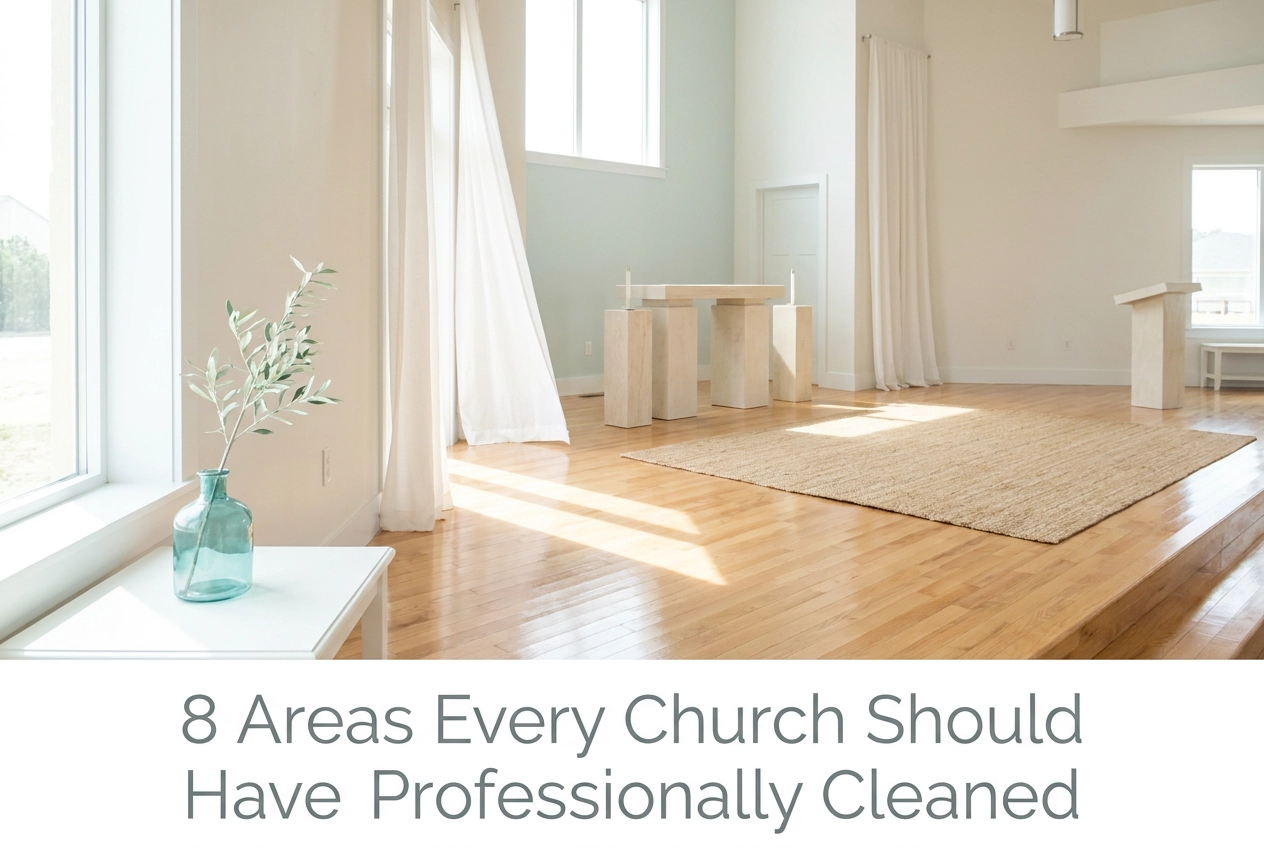
A clean and welcoming church creates an environment where congregation members feel comfortable, respected, and spiritually focused. Yet maintaining a large facility with high foot traffic, diverse spaces, and unique needs can quickly become overwhelming for volunteer-led cleaning efforts alone.
This is where professional cleaning services for churches become an essential investment rather than an optional luxury. Many church administrators and facility managers underestimate just how many areas within their building require specialized equipment, expert techniques, and consistent attention to maintain properly.
Whether you are new to managing a church facility or simply looking to improve your current maintenance approach, this guide is designed with you in mind. In the following list, we will walk you through eight critical areas of your church that benefit greatly from professional cleaning. From sanctuaries and restrooms to nurseries and fellowship halls, you will discover why certain spaces demand a higher standard of care. By the end, you will have a clear picture of where to focus your cleaning budget for the greatest impact on your congregation’s health, safety, and overall experience.
1. The Sanctuary and Pews
The sanctuary is the heart of any church, and it is also the most heavily used space in the entire facility. Each week, hundreds of congregants fill the pews, track in debris from outdoors, and leave behind dust, allergens, and germs on every surface they touch. For church administrators, this level of foot traffic makes professional cleaning essential, not simply a nice-to-have addition to the budget.
Pew cushions and upholstered seating deserve special attention during every cleaning cycle. Fabric surfaces trap crumbs, skin cells, dust mites, and odors that build up steadily between Sunday services. Standard vacuuming is rarely enough. Professional cleaners use specialized equipment and targeted spot treatments to lift ground-in stains and neutralize odors without damaging delicate upholstery fabric. According to sanctuary cleaning protocols developed for religious facilities, churches have unique furniture configurations and surface types that require cleaning approaches specifically scoped to the facility rather than generic commercial methods.
Hard flooring throughout the sanctuary also requires consistent professional care. Whether the floor is hardwood, stone, or tile, high foot traffic wears down surface finishes and grinds in dirt that a standard mop cannot fully remove. Janitorial and floor care services remain the dominant segment driving commercial cleaning demand globally, reflecting just how critical proper floor maintenance is across all facility types.
Pulpits, lecterns, and altar surfaces are touched repeatedly during every service by clergy and lay leaders. These high-contact surfaces should be disinfected on a regular schedule, particularly because many congregation members are elderly and more vulnerable to illness spread through shared surfaces.
Window sills near stained glass, baseboards, and overhead light fixtures are commonly overlooked during volunteer-led cleaning sessions. Dust collects quickly in these areas, and without the right tools or training, volunteer teams often miss them entirely. Scheduling periodic professional cleaning ensures these neglected spots receive the attention they need to keep the sanctuary looking and feeling welcoming for every congregant who walks through the door.
2. Nursery and Childcare Areas
Church nurseries and childcare rooms rank among the highest-risk spaces in any religious facility for germ transmission. Young children mouth toys, crawl across shared mats, and touch every surface within reach, creating rapid pathogen spread that can affect entire families within a congregation. Viruses like RSV, hand-foot-and-mouth disease, and norovirus circulate easily in these environments, making a dedicated, thorough cleaning protocol a genuine health priority rather than a routine task.
If your church operates a licensed daycare or preschool program, sanitation standards become a legal matter as well. State and local licensing authorities typically impose specific hygiene requirements for childcare facilities, and failing to meet them can jeopardize a program’s operating license. Cleaning protocols in these settings need to be documented and consistent, something that informal volunteer arrangements often struggle to deliver reliably.
Product selection matters as much as frequency in nursery spaces. Because infants and toddlers spend significant time directly on floors and mats, non-toxic, eco-friendly cleaning products are strongly recommended. Green cleaning is a fast-growing segment within commercial cleaning services through 2026 and beyond, and reputable providers now offer EPA-registered, child-safe disinfectants that eliminate pathogens without exposing young children to harsh chemical residues. You can review detailed guidance in resources like this church cleaning checklist for nurseries and children’s areas to understand what a thorough protocol covers.
Toys, activity tables, and changing stations should be disinfected after every use. A full professional deep clean should be performed at minimum once per week. Changing stations in particular represent significant cross-contamination points and require special attention each service cycle.
A professional cleaning provider brings structured, repeatable sanitation protocols that reduce liability exposure for church leadership. For a broader overview of what professional care involves across a full religious facility, this guide to essential cleaning services for churches offers a helpful starting point.
3. Restrooms
Church restrooms handle an unusual traffic pattern that most commercial facilities never experience. Hundreds of people may cycle through in a span of just 15 to 20 minutes before and after a service, creating a rapid spike in bacterial buildup on high-touch surfaces including faucet handles, door knobs, flush levers, and light switches. The CDC recommends that community facilities with higher traffic consider more frequent cleaning and disinfection, distinguishing between three critical levels: cleaning, sanitizing, and disinfecting. Each level serves a distinct purpose, and a properly maintained church restroom requires all three.
Professional cleaning services bring commercial-grade protocols to this challenge, including grout scrubbing, fixture descaling, and floor mopping with hospital-grade disinfectants that are simply not available off the shelf at retail stores. Odor control is another area where volunteer-based cleaning consistently falls short. Without professional-grade products and trained application techniques, unpleasant odors return quickly, creating a poor first impression for visitors and new members.
ADA-compliant restrooms with grab bars, accessible fixtures, and wider stall footprints also require careful attention around specialized hardware that untrained volunteers may inadvertently skip or clean incorrectly.
Finally, restroom cleaning schedules must align with actual event frequency. A congregation that hosts multiple weekly services, weddings, and funerals needs post-event cleaning every time, not just once a week. A comprehensive cleaning strategy tailored to your full activity calendar is the only reliable way to maintain restroom hygiene standards throughout the week.
4. Fellowship Halls and Common Areas
Fellowship halls are among the most versatile and heavily used spaces in any church facility. Unlike the sanctuary, these rooms serve dozens of purposes throughout the week, including potluck dinners, community outreach programs, educational workshops, wedding receptions, funeral luncheons, and private rentals. Each of these events generates a distinct type of mess, from greasy food residue after a community dinner to scattered debris following a children’s program. A single cleaning routine cannot adequately address all of these scenarios, which is why professional cleaning services designed around a congregation’s event calendar are so valuable.
The sheer size of most fellowship halls creates a practical challenge that volunteer teams simply cannot overcome with standard residential equipment. Large, open floor plans spanning several thousand square feet require commercial-grade auto-scrubbers, ride-on polishers, and professional floor care solutions to clean effectively. Professional religious facility cleaning programs typically include dedicated floor care services covering hard floor maintenance, carpet spot treatment, and detailed attention to baseboards and corners. Volunteers using residential mops and vacuums cannot replicate these results, making professional service a practical necessity rather than an optional upgrade.
Tables, chairs, and folding furniture present another layer of concern that standard post-event wiping cannot fully address. Food residue, grease, and bacteria accumulate in joints, undersides, and folding mechanisms over time. Scheduling a thorough deep clean of all furniture on a quarterly basis, in addition to post-event surface sanitization, is a widely recommended commercial standard.
Post-event cleaning after weddings, funerals, or large holiday gatherings is also a natural trigger for scheduling a professional visit outside a routine recurring contract. Churches can maintain a lighter ongoing service agreement and supplement it with on-demand cleaning tied to their events calendar.
Finally, lobbies, welcome centers, and hallways deserve consistent professional attention because they form the very first impression any new visitor receives. A clean, well-maintained entryway communicates the congregation’s values before a single word is spoken.
5. Kitchen and Food Preparation Areas
Church kitchens serve a surprisingly wide range of functions throughout the week. From early morning coffee ministry to large-scale community meals feeding hundreds of people, these spaces experience heavy, varied use that causes food residue to accumulate on surfaces, inside appliances, and along floor edges quickly. That residue does more than look unsanitary; it actively attracts pests and creates bacterial growth conditions that put anyone who uses the kitchen at risk.
Cleaning a church kitchen properly requires more than general janitorial knowledge. Commercial kitchen standards for grease removal, exhaust hood maintenance, and food-contact surface sanitization follow different protocols than routine office or restroom cleaning. Providers who are not experienced in food-service environments may miss critical areas like grease traps, 3-compartment sinks, and stainless steel surfaces that require food-safe, non-bleach chemicals rather than general-purpose products.
Appliances such as refrigerators, ovens, microwaves, and sinks build up residue faster than most church volunteers realize. According to kitchen hygiene research, kitchen sinks carry bacterial loads far exceeding what most people expect, making scheduled deep cleaning a necessity rather than an occasional task.
Floor drains and tile grout present another challenge that standard mopping simply cannot resolve. These areas trap organic matter and bacteria deep within porous surfaces, requiring professional-grade enzyme treatments and equipment to address properly.
Churches that rent their kitchens to outside groups carry additional legal and liability considerations. Maintaining documented cleaning records demonstrates due diligence and protects the congregation if a food safety incident ever occurs.
6. Church Offices and Administrative Spaces
Church offices and administrative spaces are frequently left out of formal cleaning plans, even though staff members and volunteers spend significant time working in these areas throughout the week. A clean office environment is not just about appearances; it directly supports the health and productivity of everyone who keeps the church running behind the scenes.
Desks, keyboards, phones, and shared printers are among the most germ-laden surfaces in any workplace. Because multiple staff members and rotating volunteers often share the same equipment across different days and shifts, cross-contamination risks are higher than in a typical corporate office. These high-touch surfaces should be disinfected regularly as part of a structured, recurring commercial cleaning schedule rather than addressed only when they look visibly dirty.
Filing rooms, bookshelves, and storage closets are easy to overlook but accumulate dust steadily over time. Periodic detail cleaning of these areas goes well beyond basic vacuuming and trash removal, addressing buildup that can irritate allergies and respiratory conditions among staff. According to church facility management guidance, proactive, system-based cleaning across all building zones, including administrative areas, reduces long-term maintenance costs and keeps the entire facility functioning at a higher standard.
Consistent office cleaning also reduces sick days among full-time church employees and sends a clear message to volunteers that the whole facility is being professionally maintained. P&P Cleaning Solutions brings the same rigorous office cleaning standards used in corporate environments directly to church administrative spaces. To schedule service, call (239) 244-3353.
7. Flooring Throughout the Entire Facility
Floor care is the leading service-type segment in the global commercial cleaning market, and church facilities make it easy to understand why. Most churches contain a diverse mix of flooring materials, including carpet in the sanctuary and choir loft, hardwood in older historic buildings, tile in hallways and restrooms, and stone or terrazzo in entryways. Each surface requires a completely different cleaning method, product, and maintenance schedule. Treating all of these surfaces the same way is one of the most common and costly mistakes a congregation can make.
Carpeted areas throughout the facility deserve particular attention. Sanctuaries, choir lofts, and offices accumulate allergens, dust mites, and embedded odors over time that routine vacuuming simply cannot address. Professional hot water extraction equipment reaches deep into carpet fibers, removing the biological matter that affects indoor air quality. This is especially important for elderly congregants and children who are more sensitive to airborne allergens.
Hard surface floors in hallways, fellowship halls, and kitchens require a different approach entirely. Periodic stripping, waxing, or sealing is necessary to maintain their finish and prevent premature wear from constant foot traffic. Without this protective maintenance, surfaces dull and deteriorate far faster than they should, as outlined in this guide to church floor cleaning and maintenance.
Churches in Southwest Florida face an additional challenge that congregations in drier climates simply do not encounter. Sandy coastal soil, year-round humidity, and frequent summer rainstorms create heavy, muddy foot traffic that accelerates floor soiling significantly. This regional reality makes more frequent professional floor care a practical necessity rather than an optional upgrade.
A recurring floor care contract is ultimately the most budget-conscious decision a congregation can make. Replacing commercial carpet or refinishing hardwood is a significant capital expense. Consistent professional maintenance, as part of a scheduled cleaning plan, extends the lifespan of every flooring surface and reduces the frequency of those costly replacements, protecting tight congregation budgets over the long term.
8. Post-Event and Seasonal Deep Cleaning
Churches in Cape Coral and Southwest Florida face a cleaning challenge that most facilities in other regions simply do not encounter: the snowbird effect. From roughly October through April, congregation sizes can swell significantly as seasonal residents from northern states return to the area. This population surge means more foot traffic, more wear on flooring and seating, and a higher demand for consistent, thorough cleaning throughout the peak season. Adjusting your cleaning schedule to match this seasonal rhythm is not optional; it is a practical necessity for maintaining a welcoming and hygienic facility.
Major religious holidays add another layer of demand on top of the seasonal baseline. Easter, Christmas Eve, and Thanksgiving services routinely draw attendance that far exceeds a typical Sunday. Each of those events should trigger a scheduled post-event deep clean, not simply a standard maintenance pass. Professional deep cleaning services address the buildup that accumulates in grout lines, behind fixtures, inside air vents, and under furniture over months of regular use, as outlined in resources like church janitorial services guides for Florida facilities.
Southwest Florida churches also carry a responsibility that congregations in other parts of the country rarely face: post-hurricane recovery. Having an established relationship with a professional cleaning provider before a storm arrives means faster response, less disruption, and a safer environment for your congregation when services resume.
For most active church facilities, a practical framework includes a recurring weekly or biweekly maintenance clean combined with a professional deep clean scheduled two to three times per year. This layered approach keeps your facility consistently presentable while ensuring that deeper buildup never has the chance to become a lasting problem.
How Often Should a Church Be Professionally Cleaned?
Determining the right cleaning frequency for your church is one of the most practical decisions a facility administrator can make. The answer depends on several key factors specific to your congregation and facility.
Weekly professional cleaning is the standard recommendation for any active church holding regular Sunday services. Ideally, this cleaning should be scheduled between Saturday evening and early Sunday morning, so every pew, restroom, and entryway is fully prepared before the first congregant arrives. Waiting until after Sunday services means your facility goes an entire week without professional attention, which is not ideal for high-traffic spaces like sanctuaries and nurseries.
Biweekly cleaning works well for smaller congregations or churches with minimal mid-week programming. It keeps costs manageable while maintaining a consistent level of cleanliness. Monthly professional cleaning, on the other hand, is generally only appropriate for low-use storage rooms or auxiliary spaces that rarely see foot traffic.
When evaluating your schedule, church administrators should consider average weekly attendance, the number of services held each week, mid-week activities such as youth groups or Bible studies, and whether outside organizations rent the facility regularly.
Special events such as weddings, funerals, and baptism receptions require dedicated cleaning separate from your recurring schedule to ensure proper staffing and time.
P&P Cleaning Solutions makes recurring church cleaning financially accessible by offering discounts for weekly, biweekly, and monthly scheduling commitments, helping congregations maintain a clean, welcoming facility without straining fixed operational budgets. Call (239) 244-3353 to discuss a schedule tailored to your church’s needs.
What to Look for in a Church Cleaning Provider
Choosing the right cleaning provider for your church requires more than a quick price comparison. The decisions you make during the selection process will directly affect the health, safety, and appearance of your facility for years to come.
Commercial and institutional experience should be your starting point. A provider that works primarily with residential homes may lack the equipment, staffing, and protocols needed to manage a large, multi-use facility effectively. Churches operate more like institutional buildings than private residences, and your cleaning provider should reflect that understanding.
Scheduling flexibility is equally important. Most churches have narrow cleaning windows, typically limited to evenings, early mornings, or weekdays when the building is not in active use. A provider that cannot accommodate those windows is not a practical fit, regardless of pricing.
Green and non-toxic cleaning products have become a growing standard in commercial cleaning, and they are especially important for nurseries and childcare rooms where children are exposed to every treated surface. Always ask prospective providers specifically which product lines they use in sensitive areas.
Reliability and consistent team assignment matter deeply in a faith-based environment. Cleaning crews often work inside church buildings without direct supervision, making trust, accountability, and familiarity with the facility layout essential qualities in any provider you hire.
P&P Cleaning Solutions serves commercial clients across Cape Coral and Southwest Florida, offering customizable cleaning plans, recurring schedule discounts, and responsive professional service. Contact P&P directly at (239) 244-3353 to discuss a plan tailored to your congregation’s schedule and needs.
Keeping Your Church Clean Is an Act of Stewardship
Professional cleaning services for churches cover every corner of a facility that volunteer teams simply cannot maintain consistently on their own. From sanctuaries and nurseries to restrooms, kitchens, fellowship halls, offices, and all floor types throughout the building, a trained cleaning crew addresses the full scope of what a busy church requires week after week. Volunteers give generously of their time, but redirecting that energy toward ministry and community care is itself a stewardship decision worth making.
Recurring professional cleaning is also a direct investment in the health, safety, and reputation of your congregation. A consistently clean facility communicates care to every first-time guest and honors the trust of every donor who contributes to its upkeep. The global commercial cleaning market is growing at roughly 4.5% annually through 2032, reflecting that professional cleaning standards are rising across all facility types, including faith-based organizations. Churches that adopt professional cleaning programs now align themselves with that rising standard.
Church administrators in Cape Coral and Southwest Florida are encouraged to contact P&P Cleaning Solutions at (239) 244-3353 to schedule a facility walkthrough and receive a custom cleaning quote. P&P offers flexible scheduling Monday through Saturday, with Sunday availability, and provides recurring service discounts structured to fit the budget cycles that most churches operate on.
Conclusion
A clean church is more than an aesthetic choice; it is a reflection of how much your congregation values the space where faith is lived out together. From sanctuaries and nurseries to restrooms and fellowship halls, each area plays a vital role in creating an environment that feels safe, welcoming, and worthy of the community it serves. Professional cleaning ensures consistency, proper sanitation, and attention to detail that volunteer efforts simply cannot sustain alone.
The investment you make in professional cleaning is ultimately an investment in your people. When your facility shines, visitors feel welcomed and members feel valued.
Ready to take the next step? Contact a professional church cleaning service today to schedule a facility assessment. Your congregation deserves a space that reflects the care and reverence you bring to everything else you do.





Leave A Comment